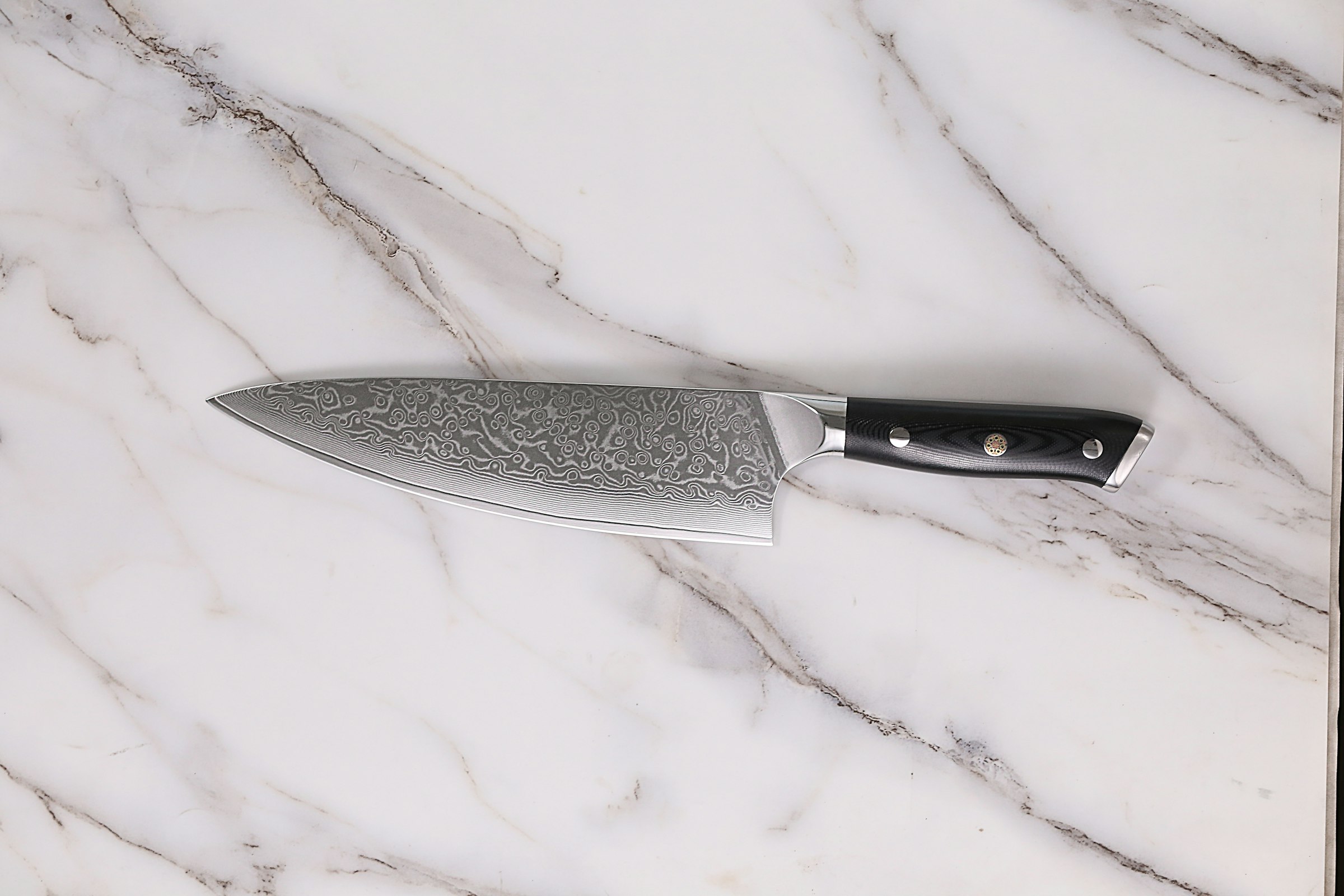
鋼 · Steel
Sixty-sevenlayers.
Three steels from Yasugi and Echizen. Each makes a different knife; each is forged the same way.
(01) — Fold after fold
1layers
One bar of steel
Heat, hammer flat, cut, stack, forge-weld. Six folds make sixty-four layers; wrapped around a hard core of carbon steel they make sixty-seven.
(02) — Choose
Three steels.
Carbon steel takes the sharpest edge and develops a patina. Stainless Damascus forgives a wet board and a busy week.
| Steel | Hardness | Edge | Easy care | Price |
|---|---|---|---|---|
| Shirogami #1 white paper steel | 63 HRC | base | ||
| Aogami #2 blue paper steel | 62 HRC | +€120 | ||
| VG10 Damascus stainless, 67 layers | 61 HRC | +€380 |
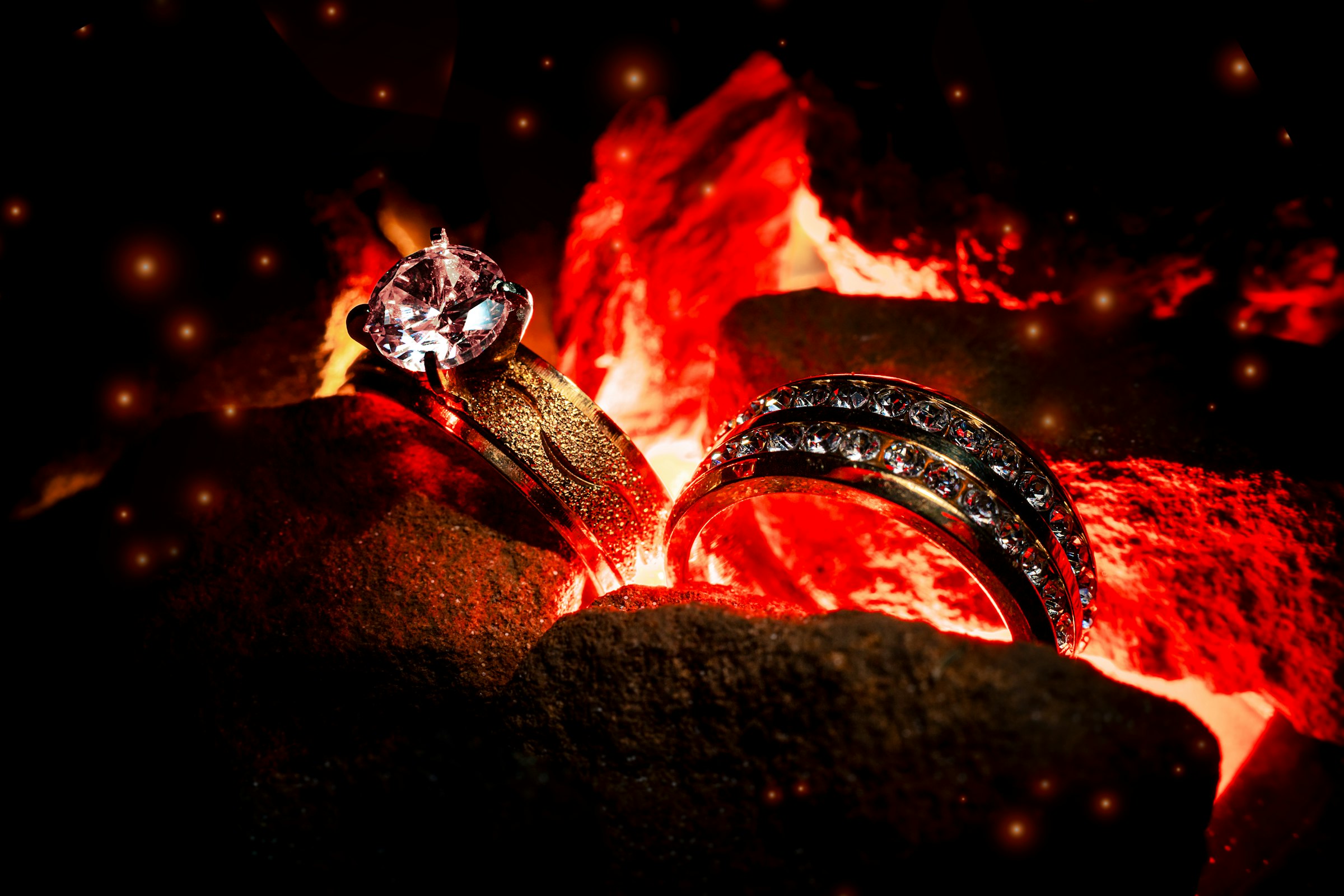
(03) — Aogami #2
Blue papersteel.
Carbon steel with chromium and tungsten from Hitachi’s Yasugi works. Named for the blue paper it is wrapped in.
It holds an edge longer than any steel we know, and asks for a dry towel after every use.
(04) — Shirogami #1
White papersteel.
The purest carbon steel: iron and carbon, almost nothing else. It sharpens fastest and gets the keenest edge.
Sushi chefs choose it. So do we, for the yanagiba.
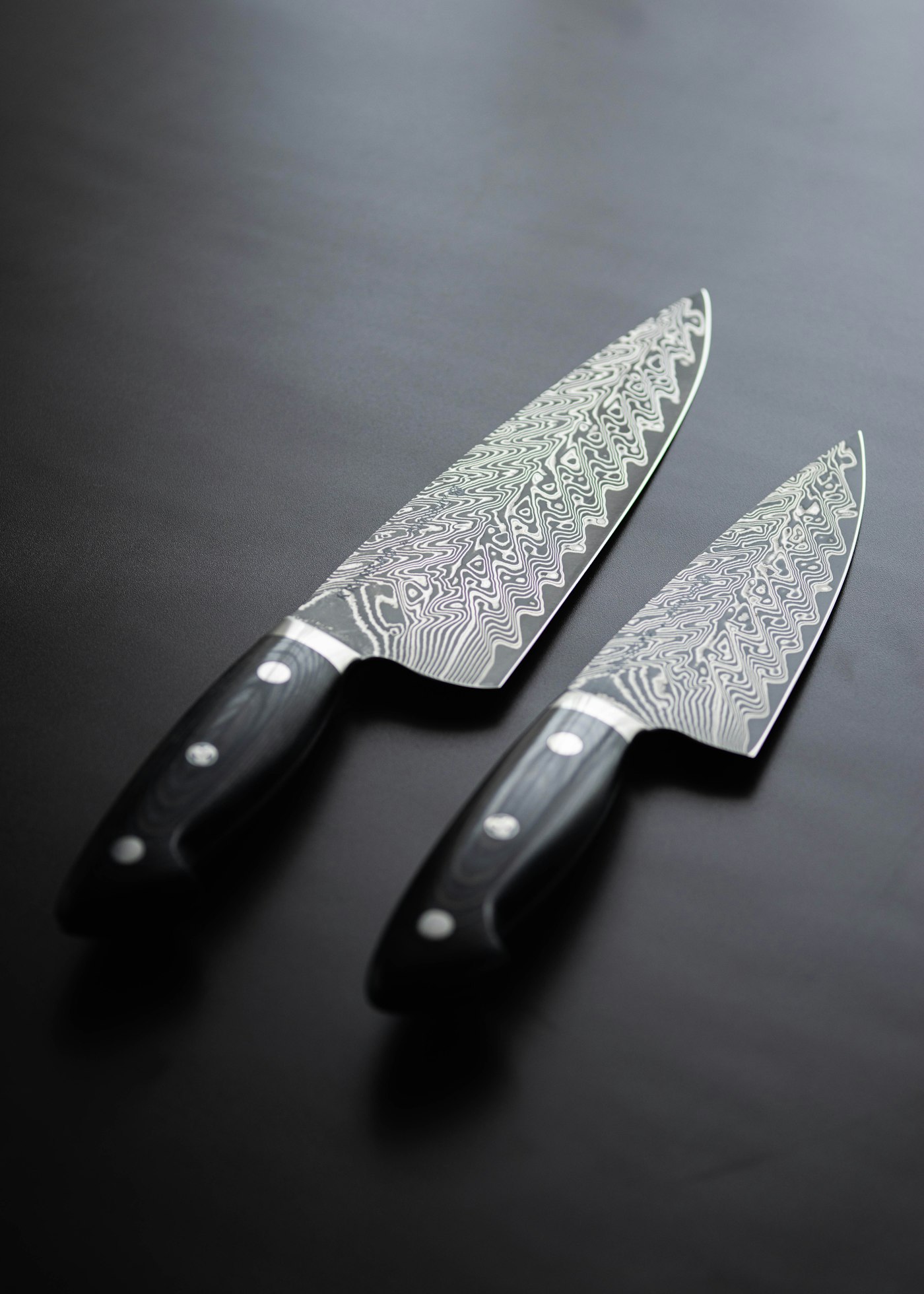
(05) — VG10 Damascus
Stainless,sixty-seven layers.
A VG10 core at 61 HRC, clad in sixty-four layers of nickel and stainless steel, etched to show the folds.
The pattern is different in every knife: it is the map of every hammer blow.