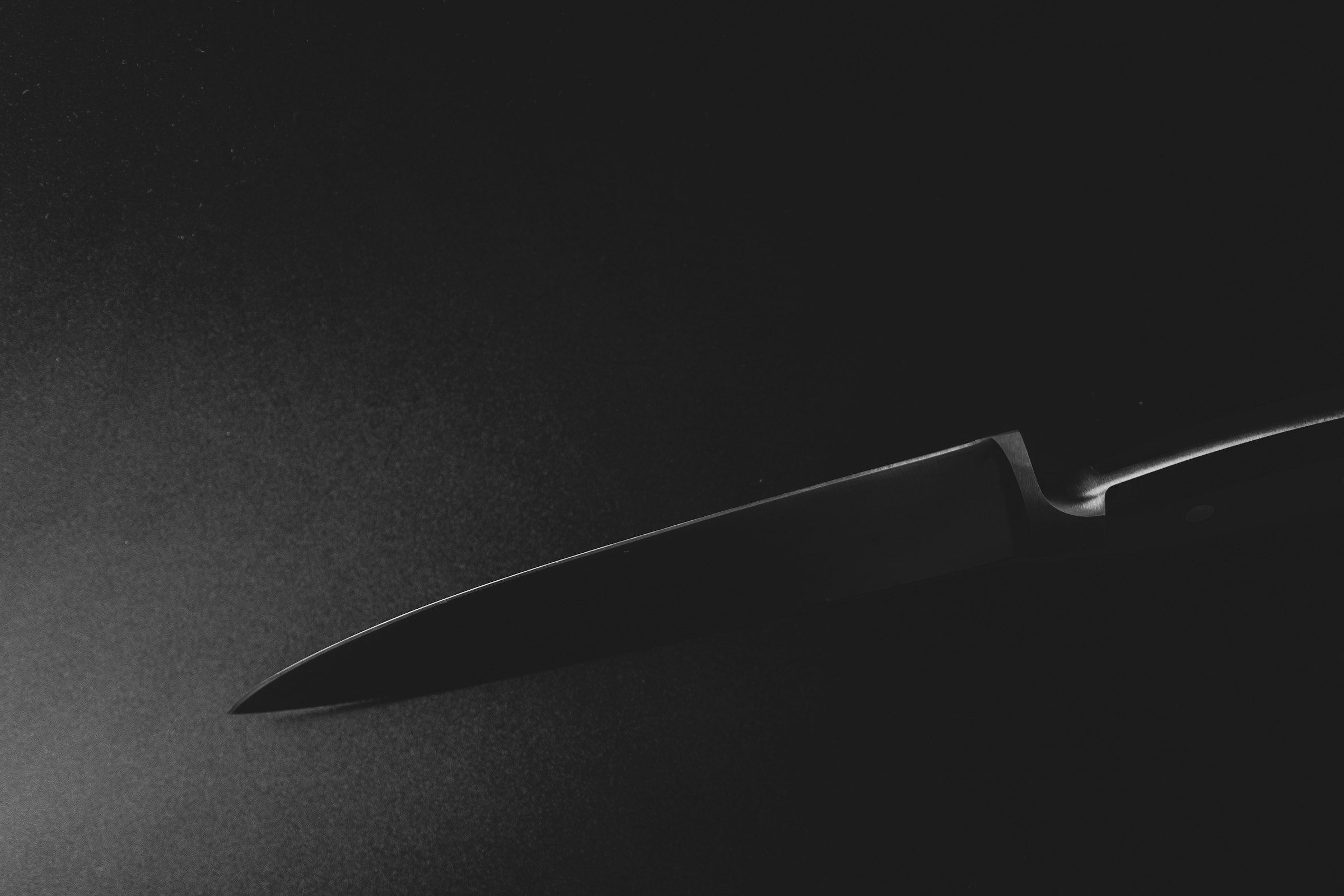
三徳 · three virtues · from €980
Santoku
Three virtues: meat, fish, vegetables. Shorter than a gyuto, flatter, and calm in any hand.
Commission a santoku ↗Measured heel to tip.
Knuckle room over the board.
With an ebony handle.
50/50 grind.
(01) — Drawing
The santoku,to scale.
Every knife is drawn before it is forged, and measured against the drawing after the stone.
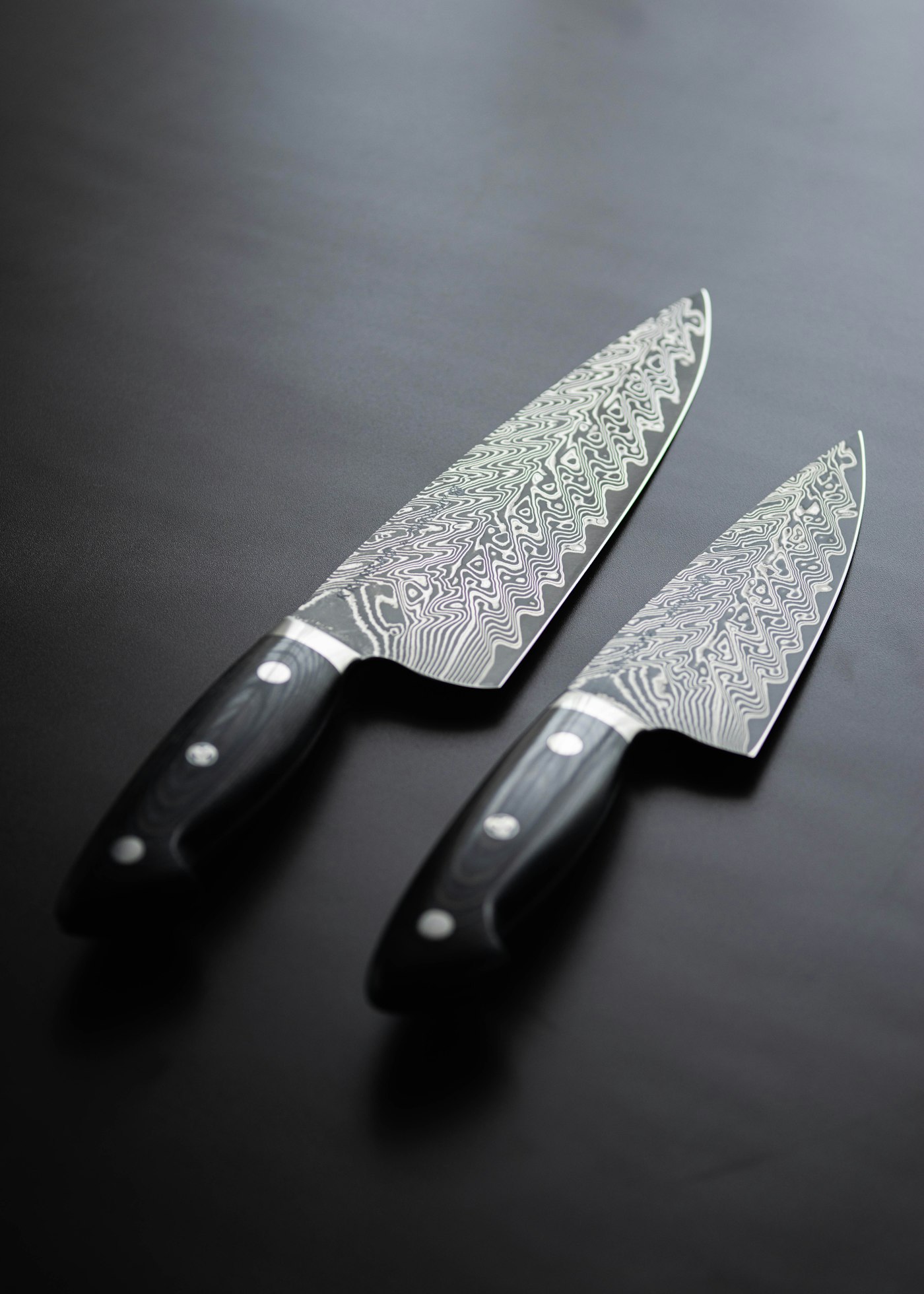
(02) — The shape
Made forthe cut.
The santoku was designed for the home kitchen of post-war Japan — a single knife for a small counter.
A flat edge means a push cut, not a rock. The sheep’s-foot tip keeps it safe and precise.
It is the knife we recommend most often as a first Japanese knife.
(03) — Steel
Three steels,one edge.
The same shape in three steels. Carbon for the keenest edge, stainless Damascus for the easiest life.
Drag to turn the knife
| Steel | Hardness | Edge | Easy care | Price |
|---|---|---|---|---|
| Shirogami #1 white paper steel | 63 HRC | base | ||
| Aogami #2 blue paper steel | 62 HRC | +€120 | ||
| VG10 Damascus stainless, 67 layers | 61 HRC | +€380 |
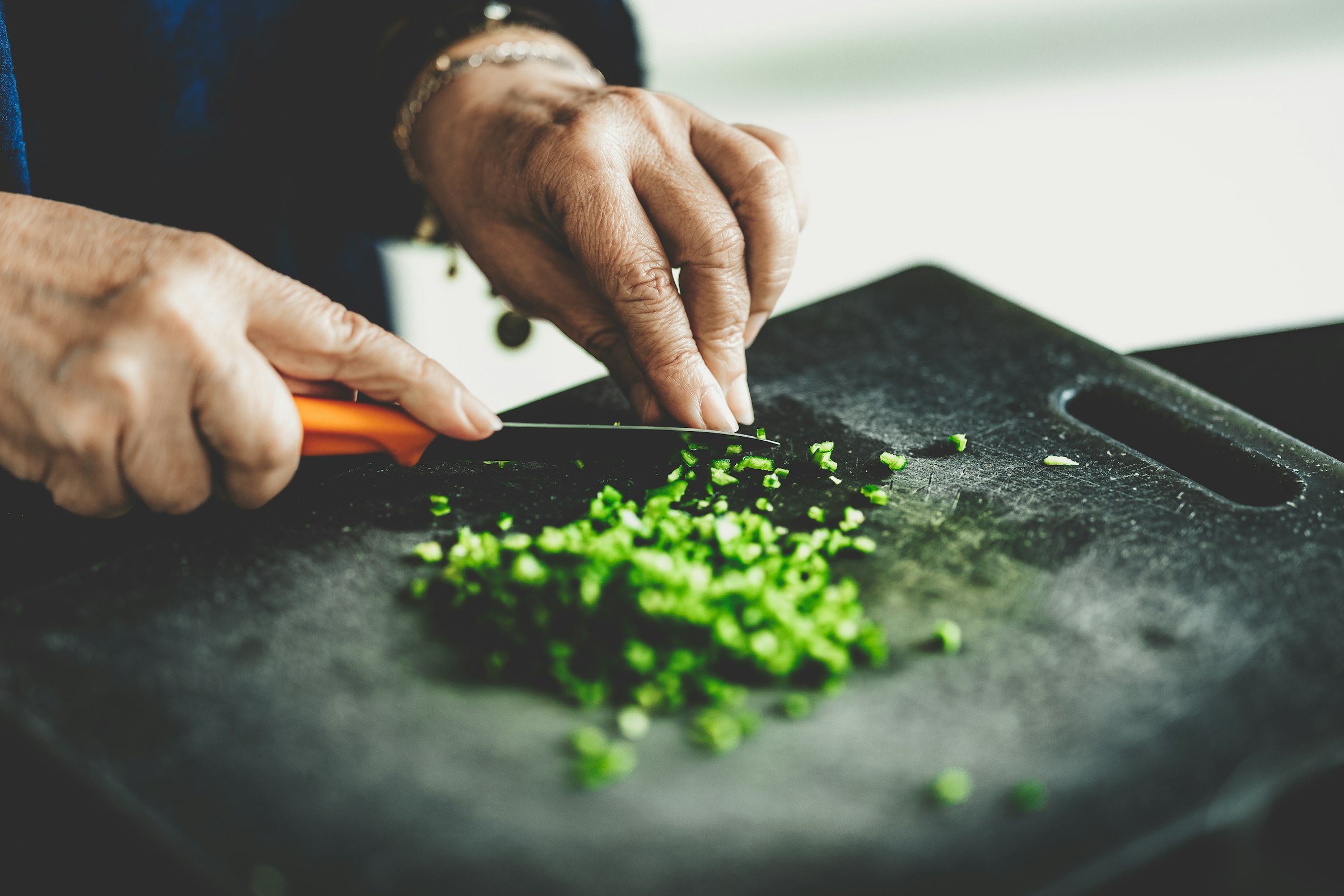
Santoku · in the kitchen
One stroke.No saw.
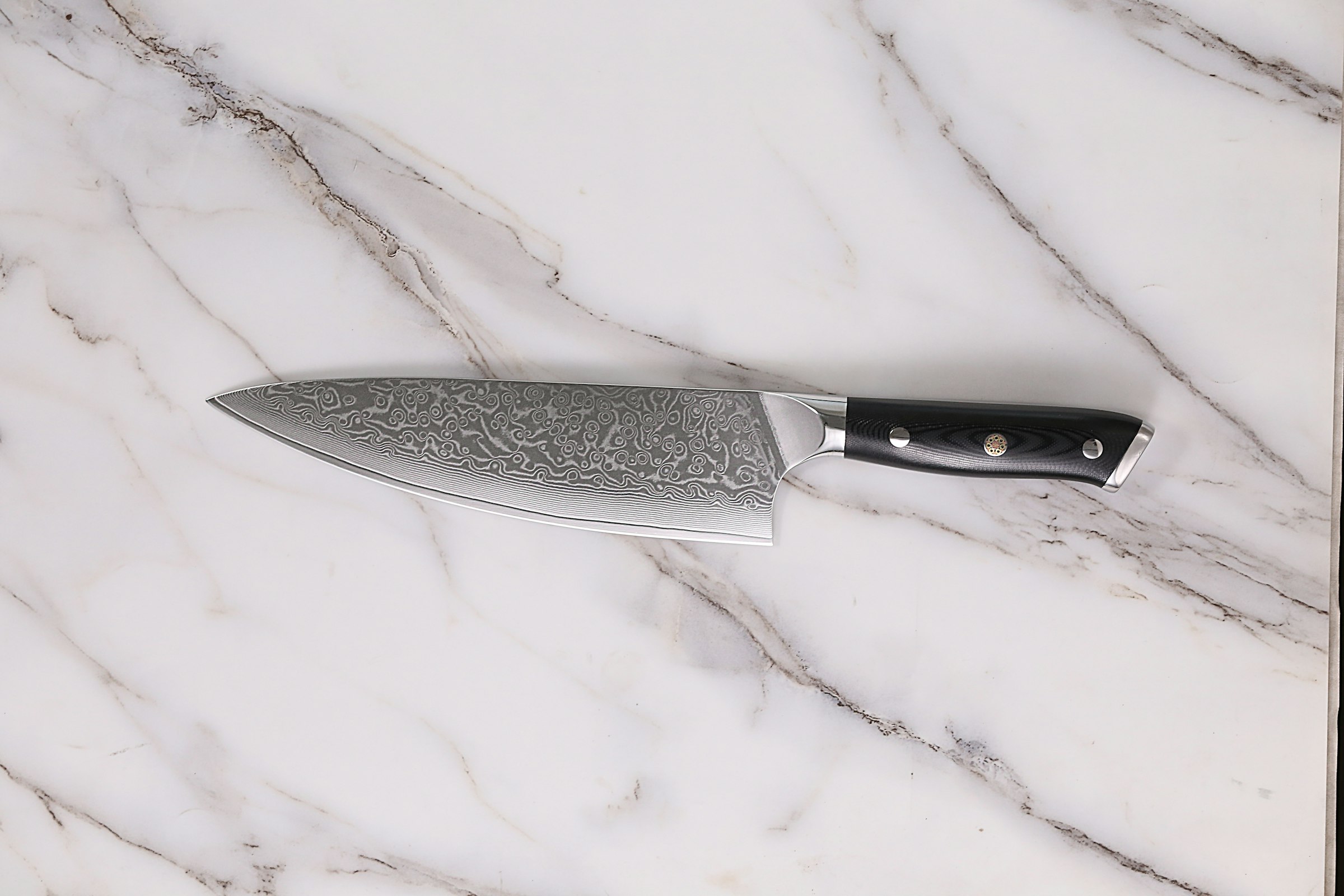 240 mm · from €1,180
Gyuto 牛刀
The chef’s knife.
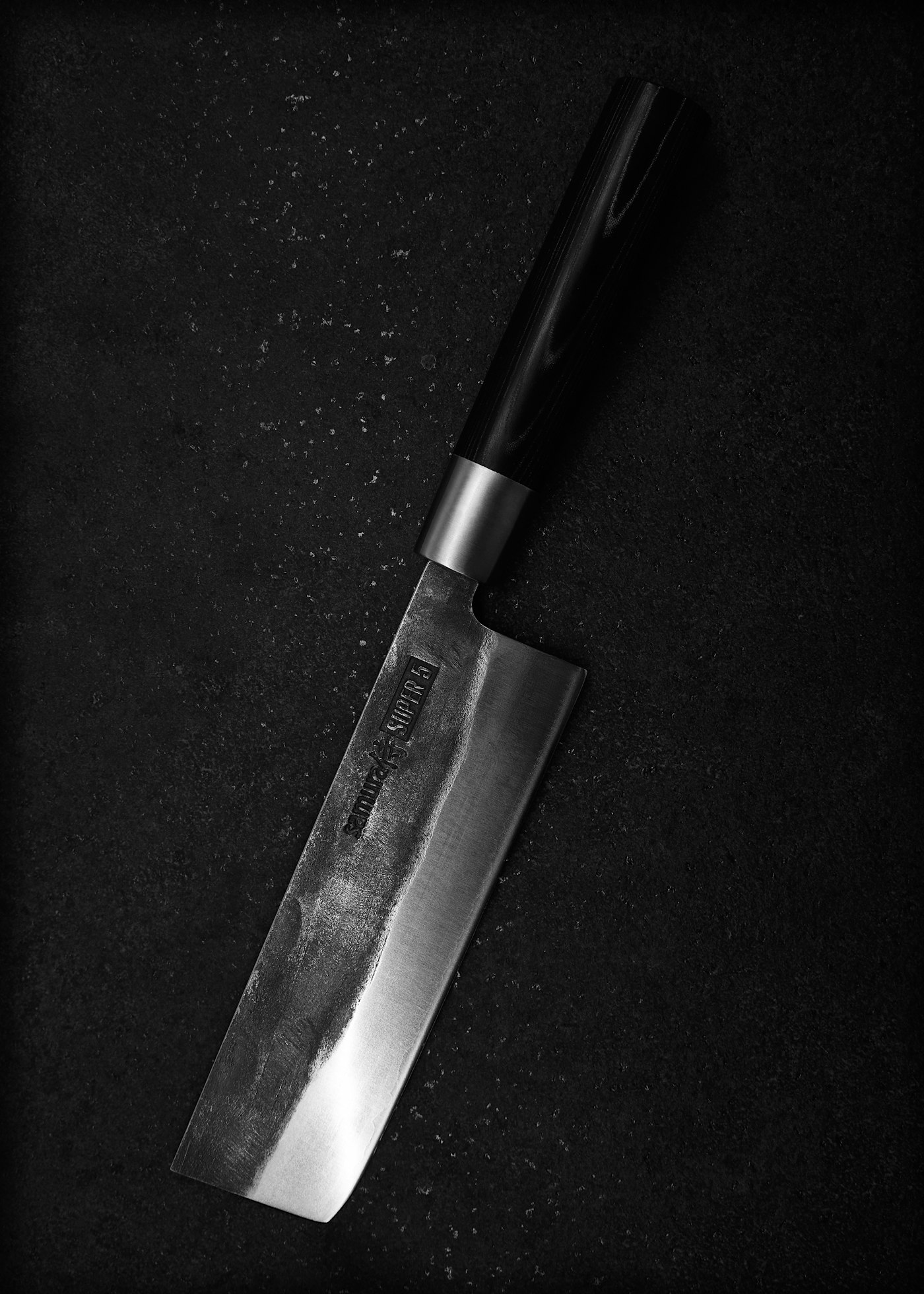 165 mm · from €920
Nakiri 菜切
A square blade for vegetables.
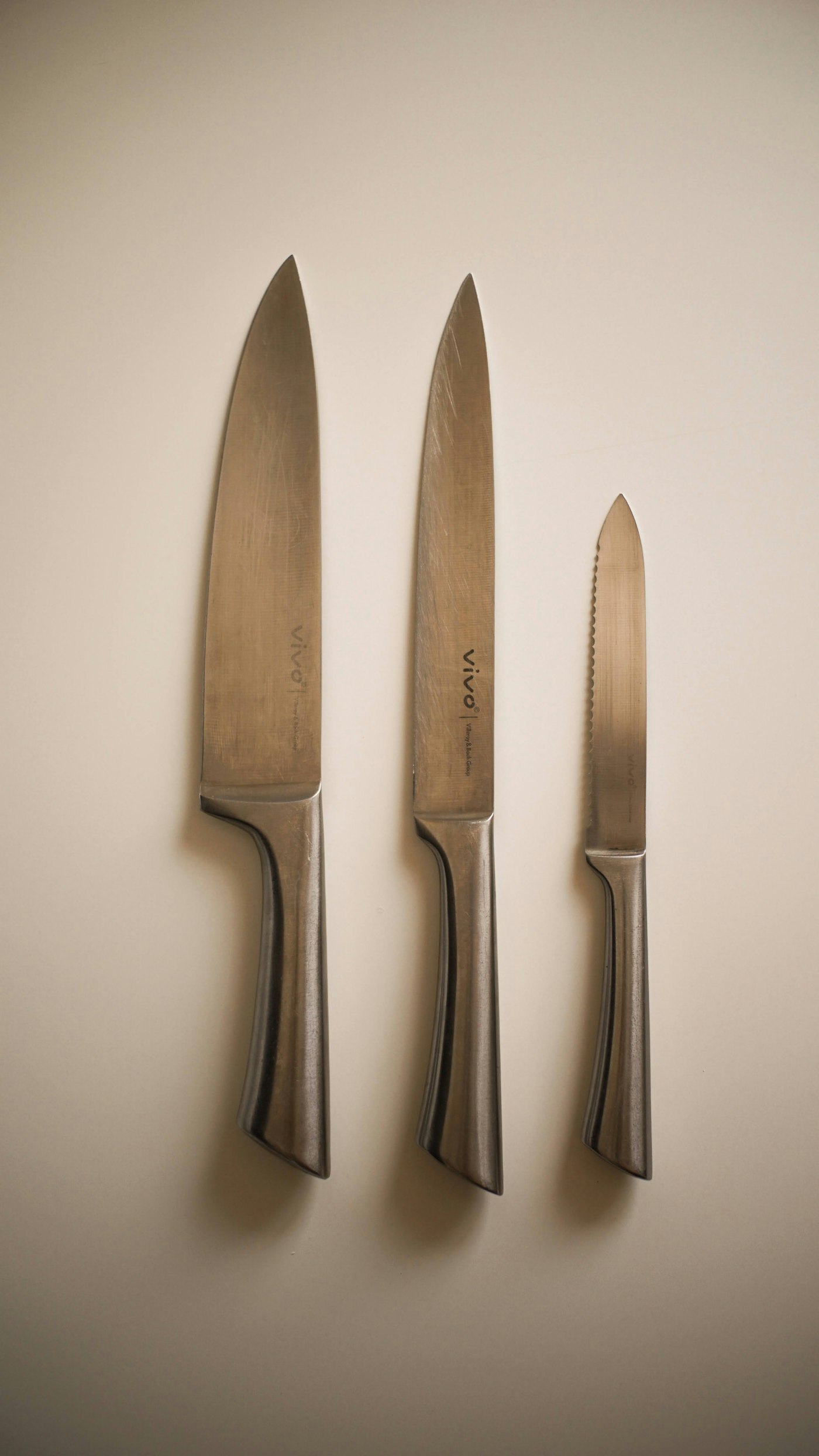 135 mm · from €640
Petty ペティ
The small one.
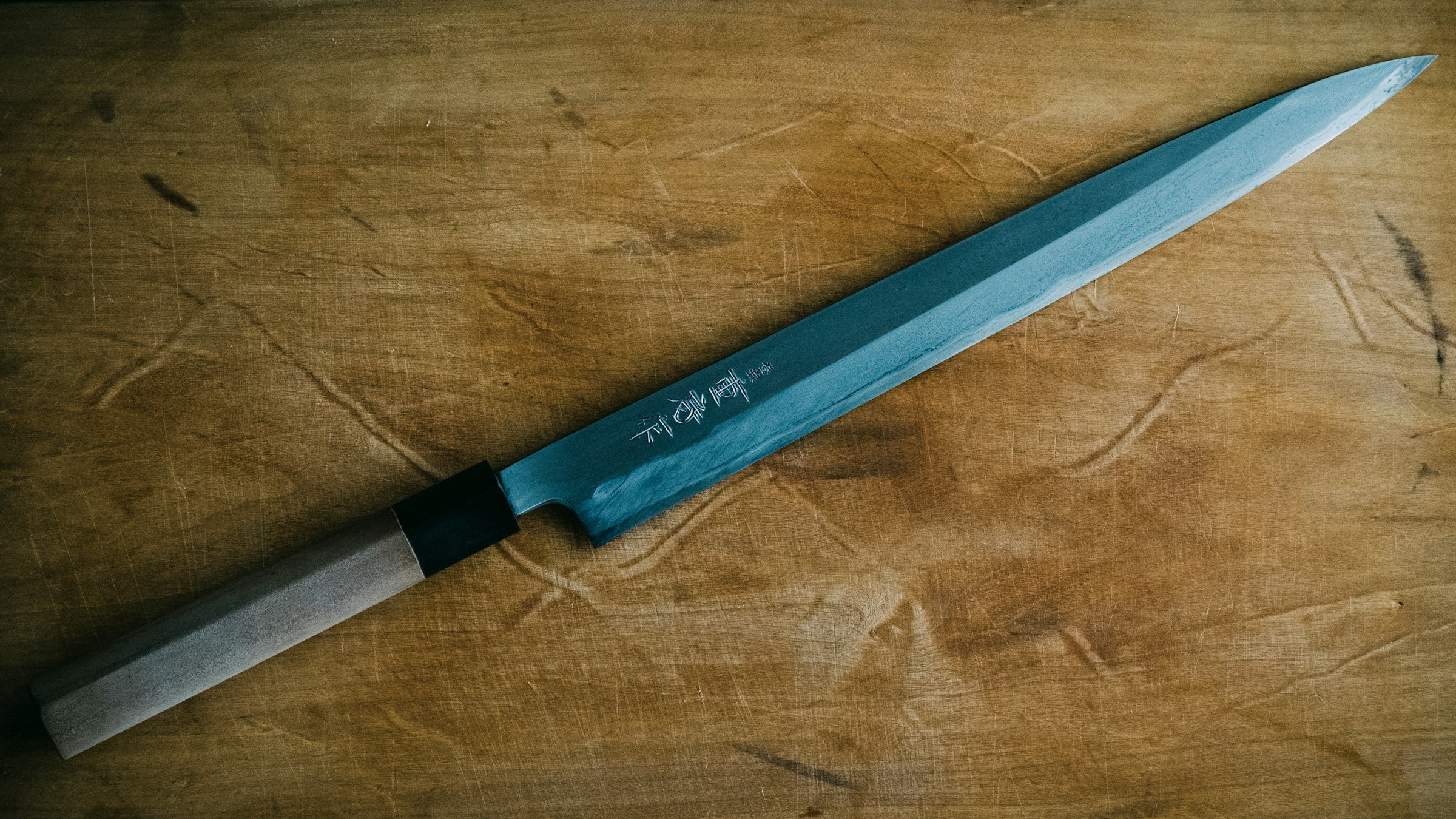 300 mm · from €1,460
Yanagiba 柳刃
The willow-leaf blade for raw fish.
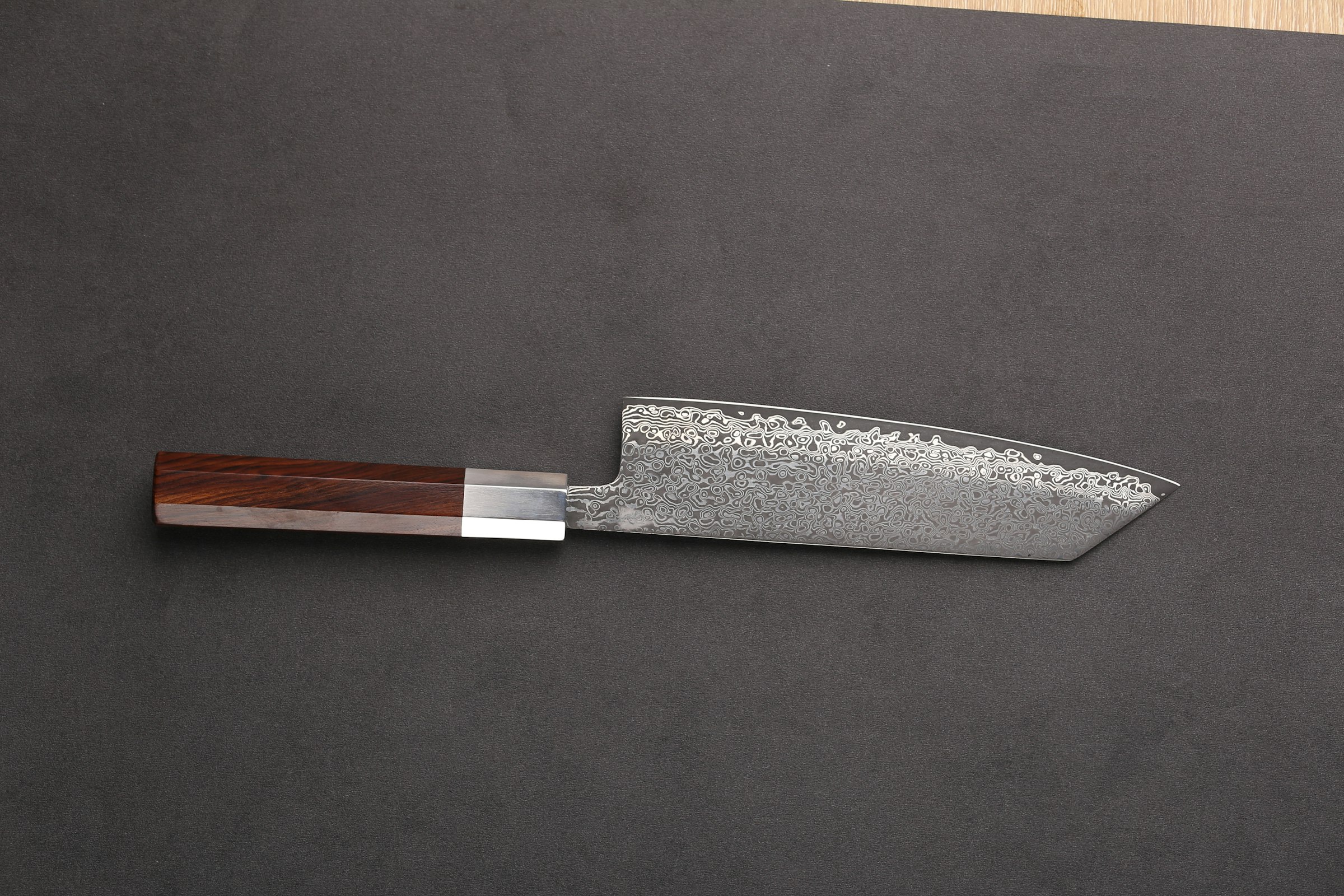 190 mm · from €1,040
Bunka 文化
The santoku’s sharper cousin: a reverse-tanto tip for fine work, a flat edge for everything else.