鍛 · The forge
Fire, hammer,water.
Seven steps and about forty hours of work turn a bar of steel into a knife. None of them can be hurried.
Commission ↗Pine charcoal, fed by bellows every morning.
Of hand work in every knife.
From billet to blade.
Judged by colour in a dark room.
(01) — The making
Seven steps.
From a bar of steel to a knife in a canvas roll.
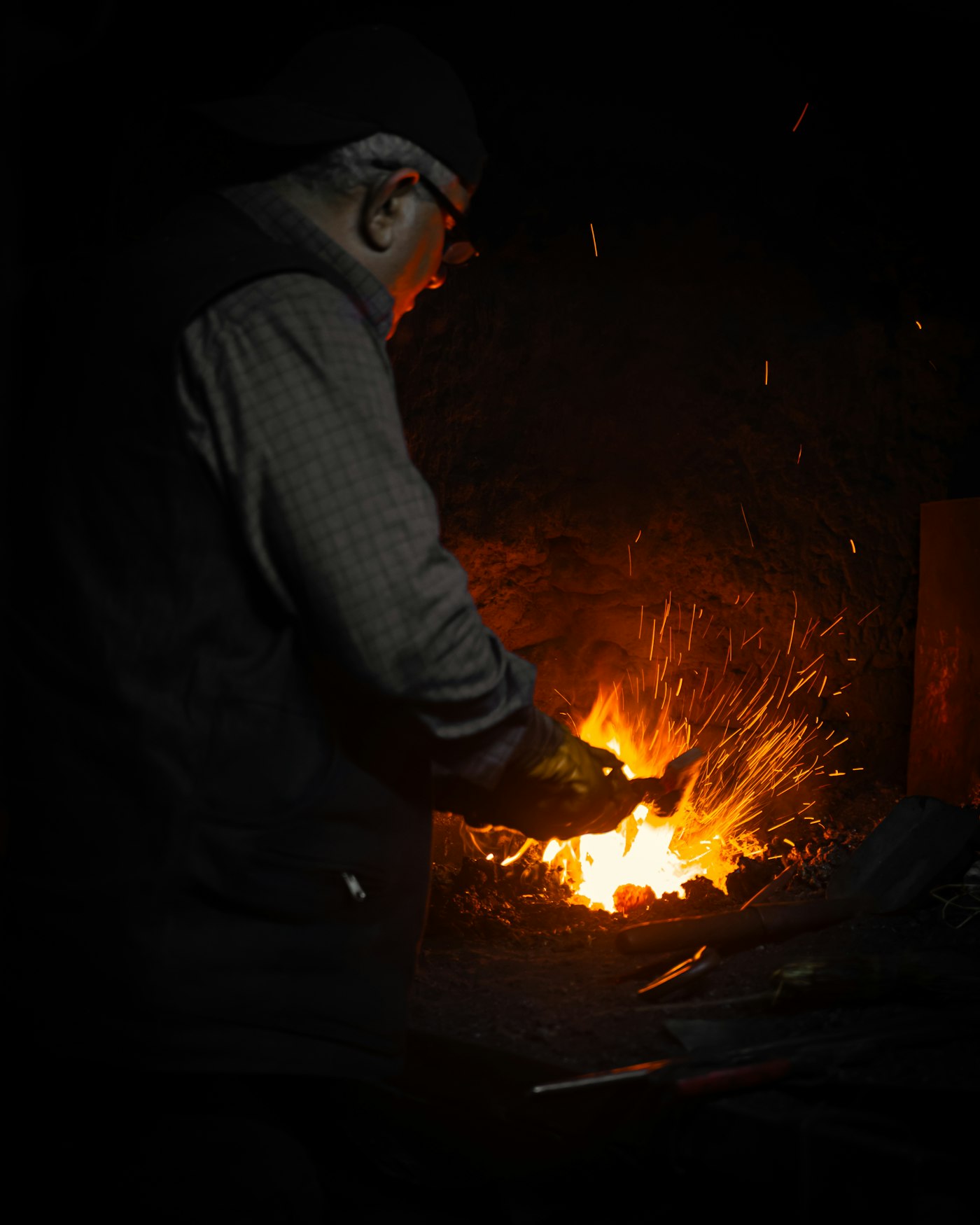
The hard core of Aogami or Shirogami is sandwiched between softer iron and welded in the fire with borax and a hundred heavy blows.
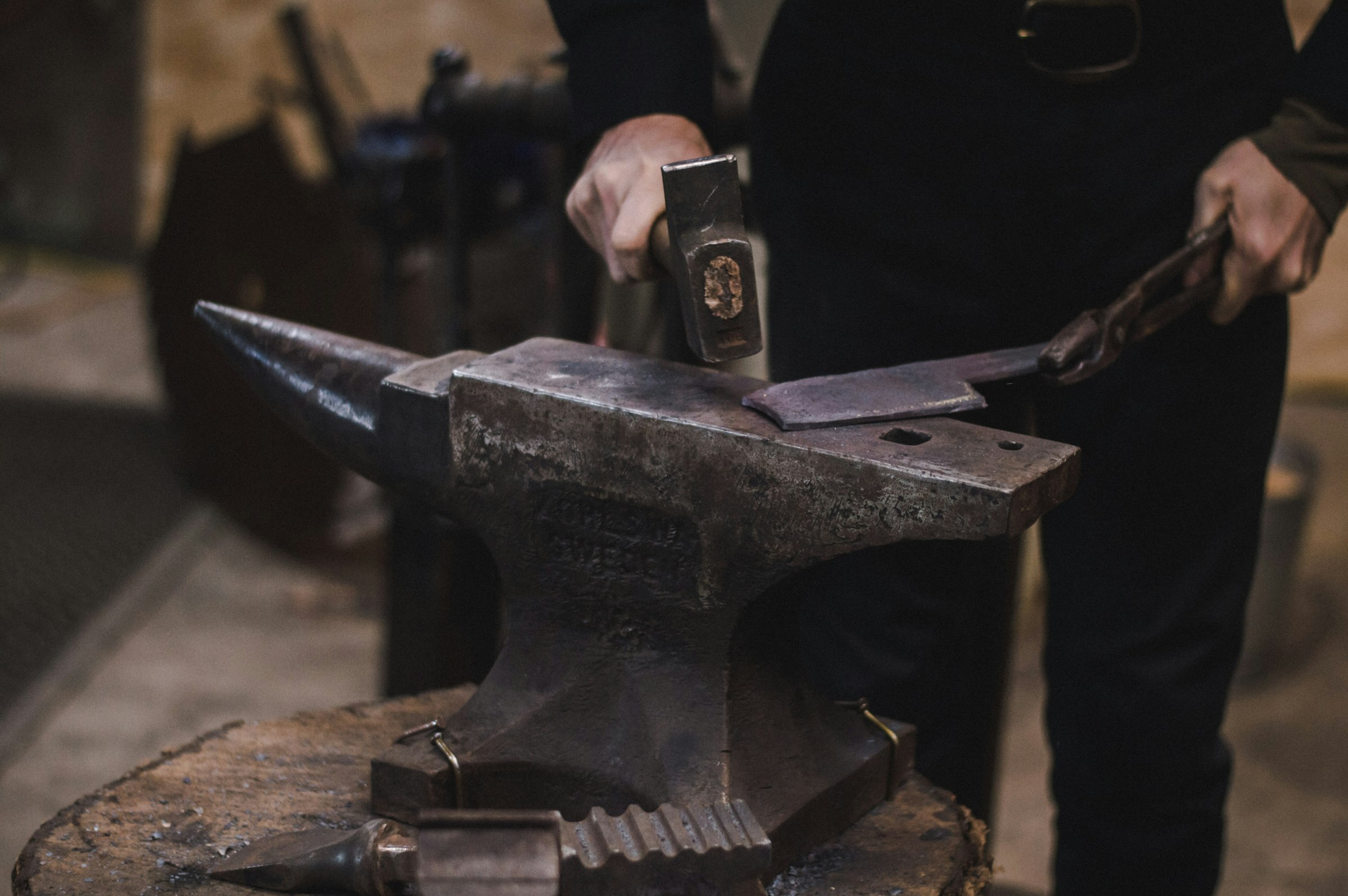
For Damascus: hammer flat, cut, stack, weld. Six times. Sixty-four layers, each thinner than a hair.
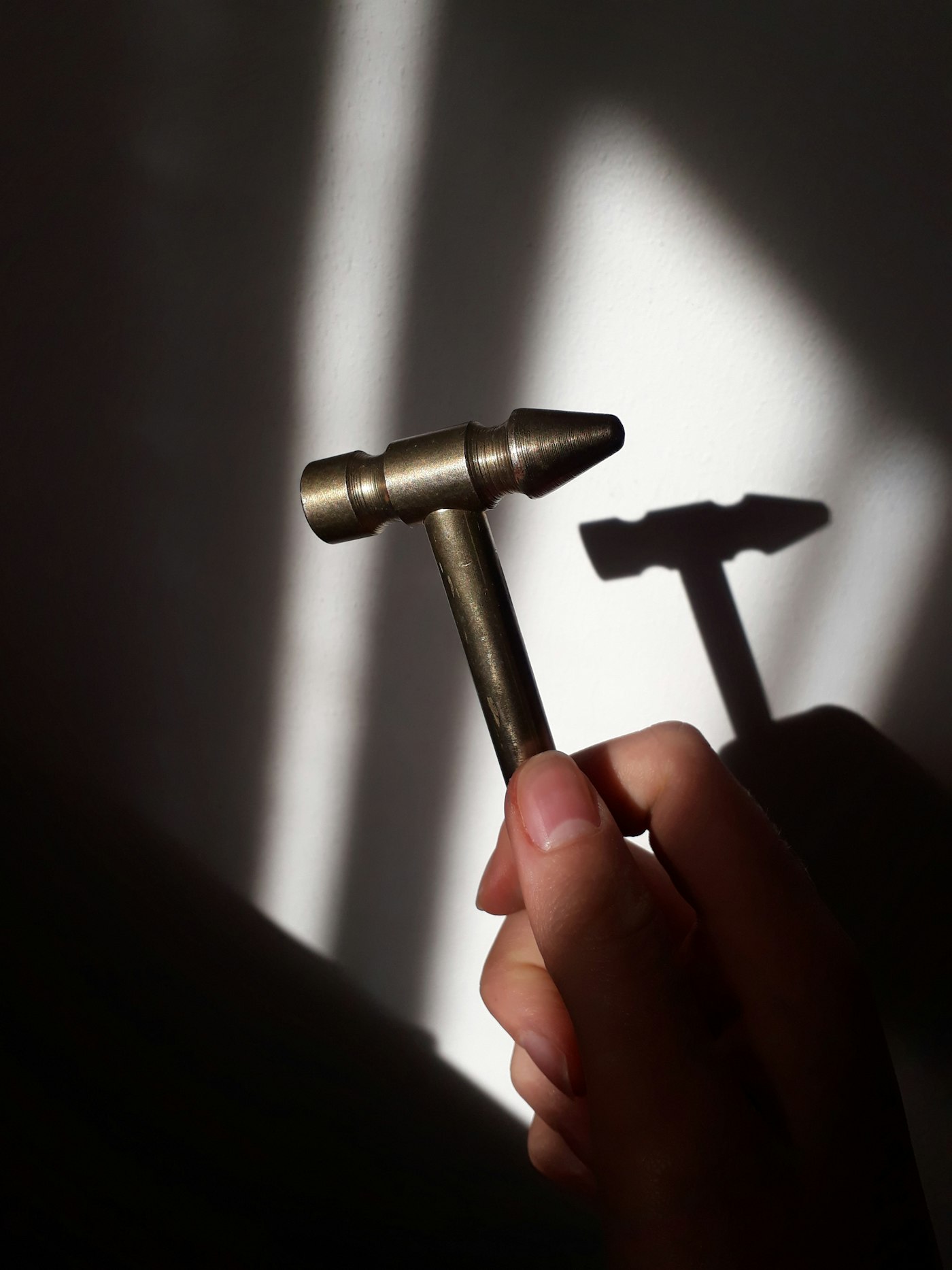
The billet is hammered into the rough shape of the blade — the spine, the tang, the bevel already hinted.
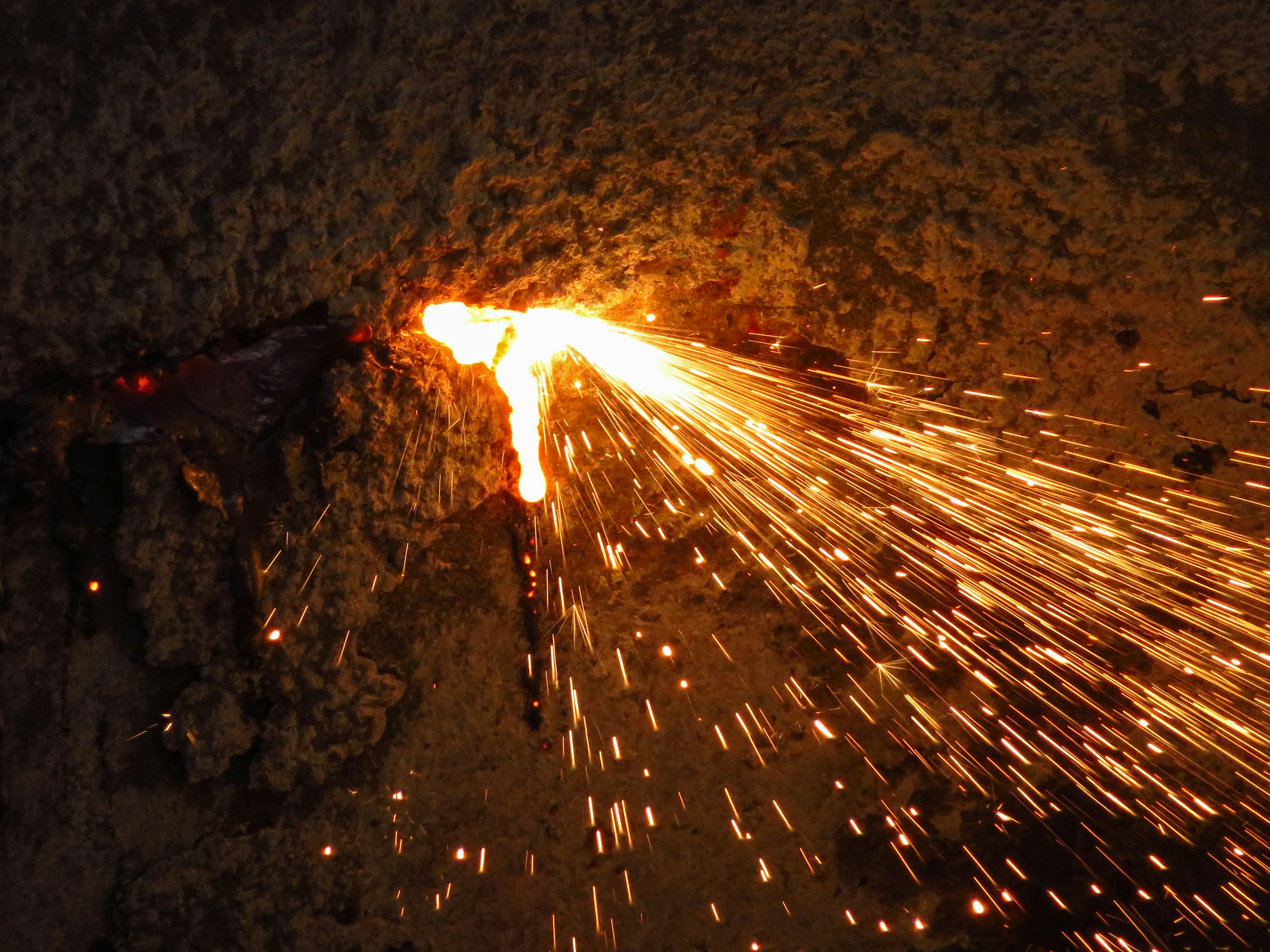
A night in rice-straw ash. The steel cools slowly and becomes soft enough to shape cold.
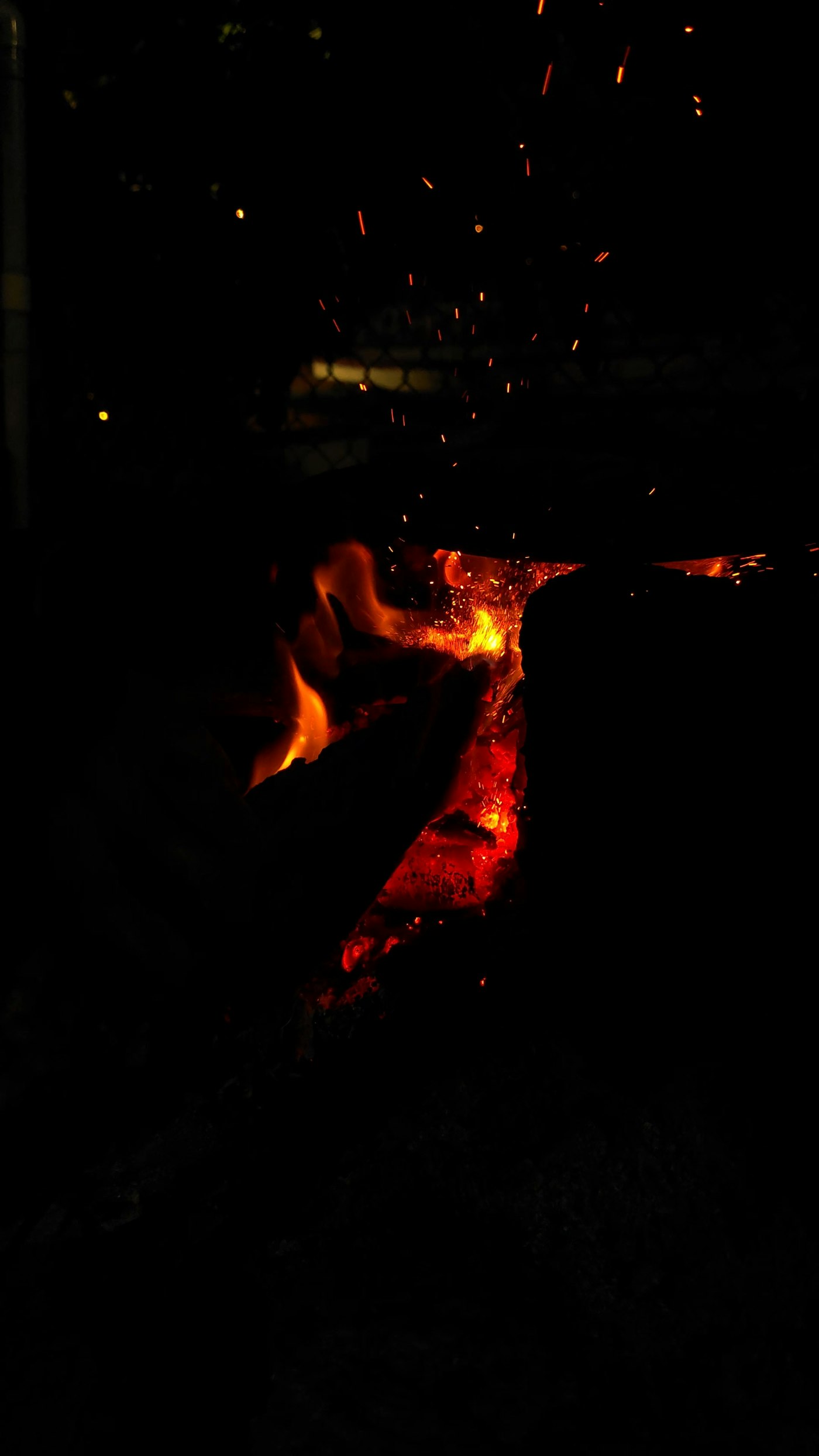
Clay on the spine, then into the water at 820 °C. The edge freezes hard, the spine stays tough.
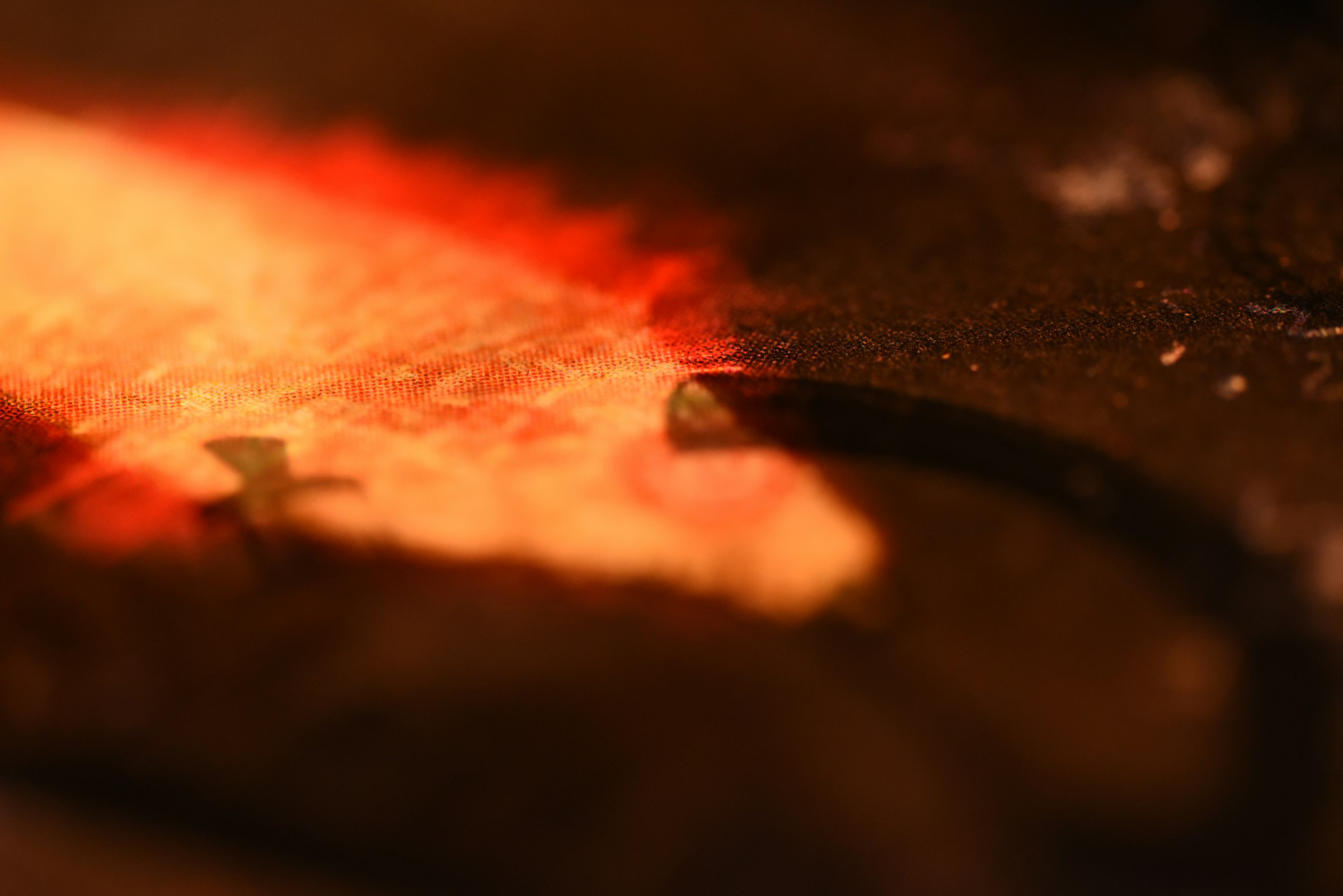
On the big wheel, then by hand. The face is flattened, the bevel set, the kurouchi left where we want it.
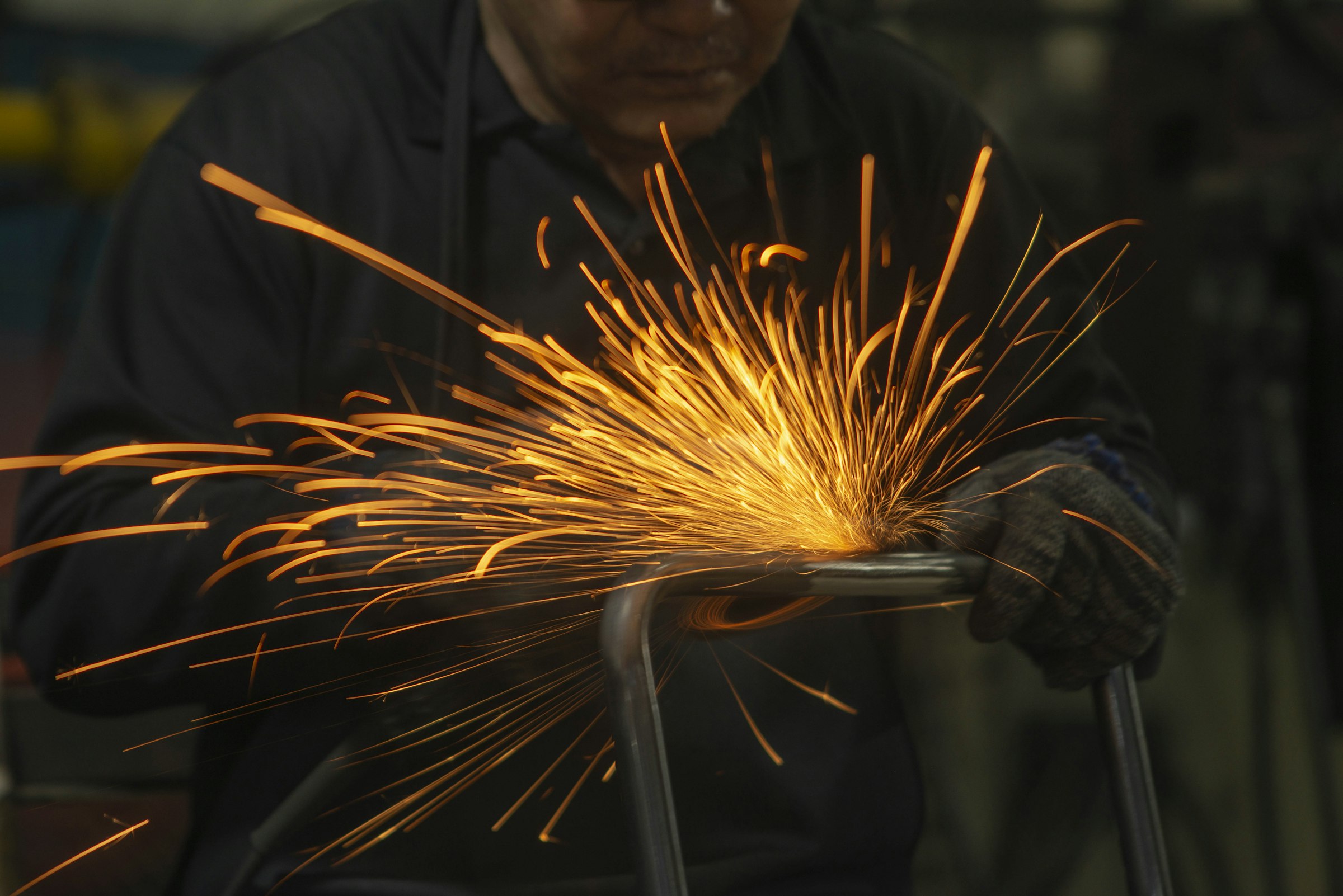
Four stones, 220 to 12,000 grit. Then the handle is burned on and the smith strikes their mark.
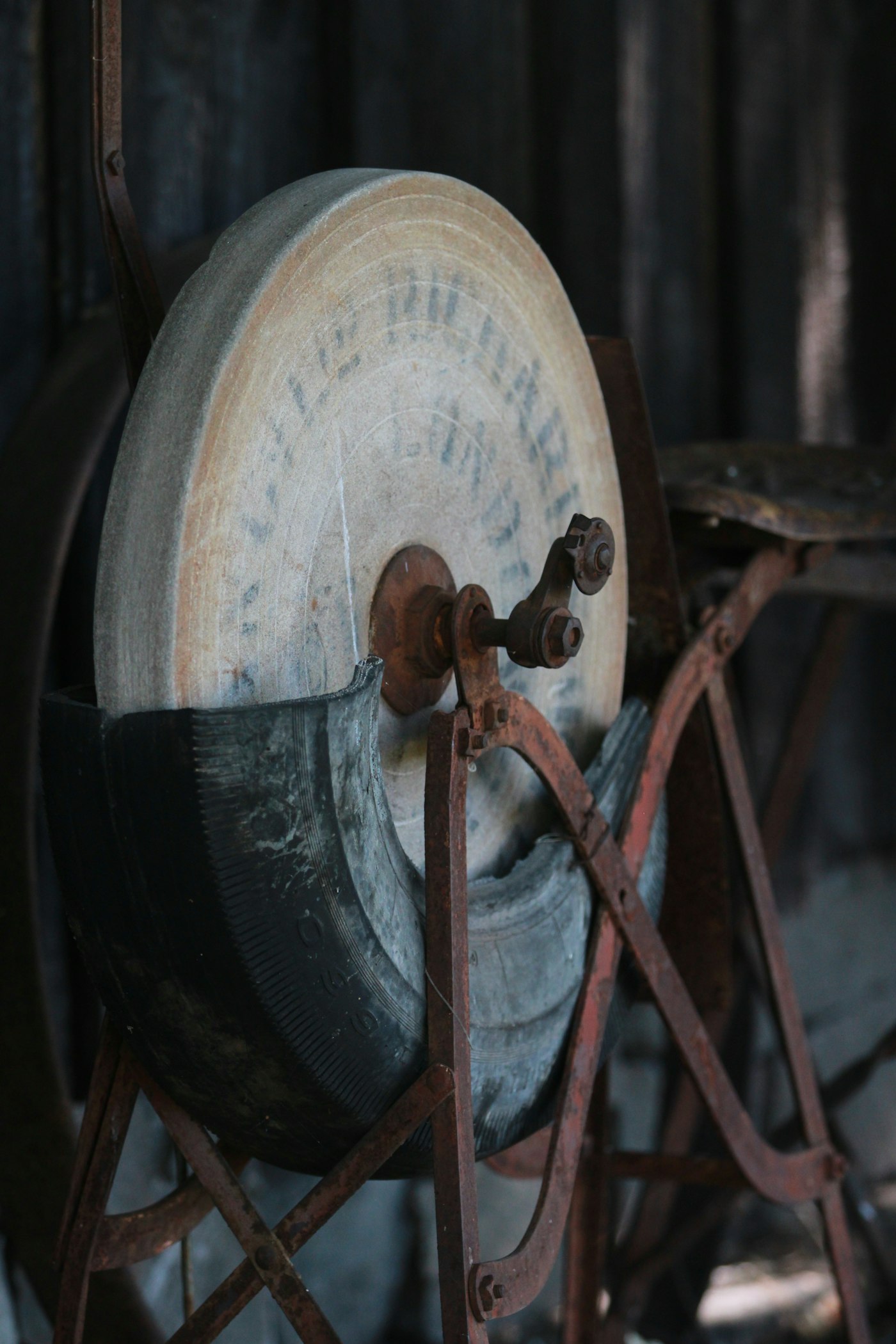
Every morning, five o’clock
The soundof Seki.
(02) — Fold after fold
1layers
One bar of steel
Heat, hammer flat, cut, stack, forge-weld. Six folds make sixty-four layers; wrapped around a hard core of carbon steel they make sixty-seven.
In the forge
“You can hear a good quench. It sings for a second, then it is quiet.”
Sato Haruto · forge