( Pressing · 6 min read )
Why we press in red
Black vinyl is black because of carbon. Ours is red because of a pigment we mixed for eleven weeks — and because a red record is one you never file away.
Black vinyl is black because of carbon black, a pigment added to make the plastic stronger and to hide the dust. For most of the history of records nobody asked for anything else.
A colour you cannot file away
When Mara Vey asked for “the colour of the light in a darkroom”, we thought it would take a week. It took eleven. Red pigment shifts under heat; what goes into the press as scarlet comes out as brick, or as a pink so thin you can read through it.
Does red sound worse?
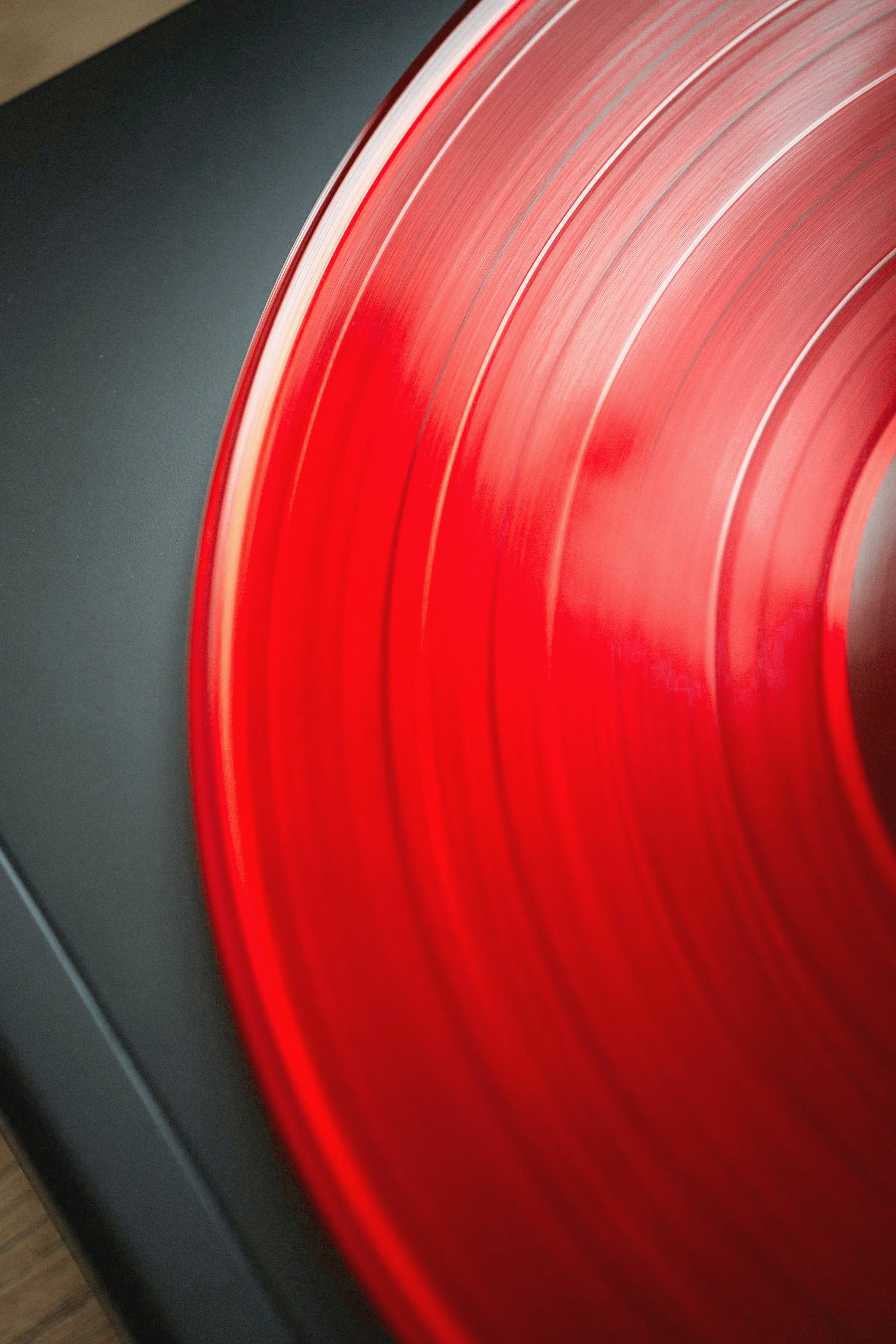
It used to. Early coloured pressings were noisier because the pigments were coarse. Ours is ground finer than flour and mixed into clear PVC, and on our test bench the red pressing measures within half a decibel of black. Your ears will not find it. Your eyes will.
Why every record
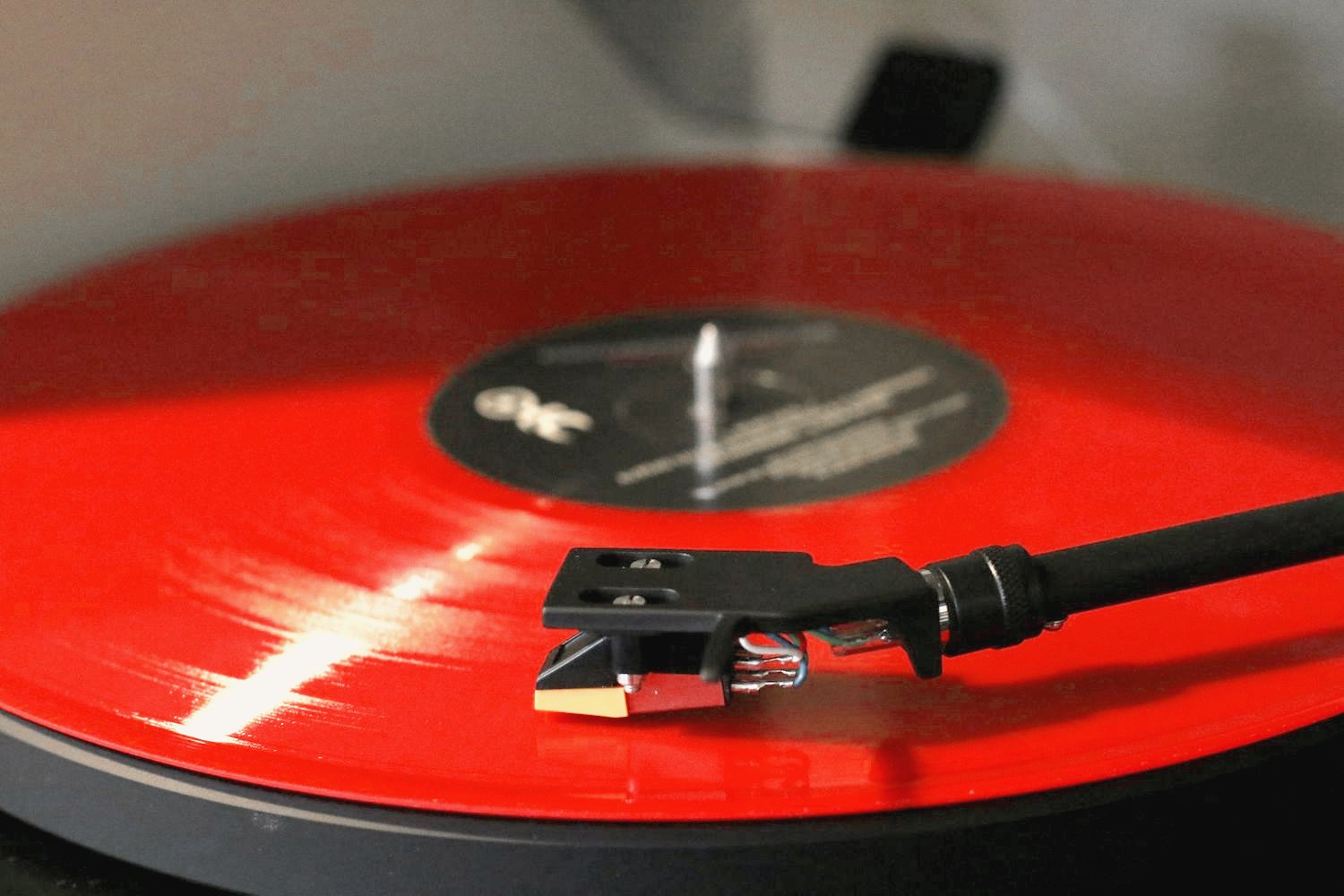
Because a shelf of Velvet records reads as one red line, and because a red record on a platter is impossible to ignore. That is the whole point: a record you notice is a record you play.
— the Velvet team, Lisbon